
Do cheap vitamin C serums actually work — or are you just pouring $20 down the drain? It’s the right question to ask, because vitamin C has the biggest price gap in all of skincare: the famous formulas cost $160+, and the drugstore shelf has lookalikes for under $20.
Here’s the honest answer, backed by dermatologist-reviewed formulation science: the active ingredient itself is a commodity. A well-formulated budget serum can brighten skin, fade mild dark spots, and defend against environmental damage just as well as a luxury one. What the extra money buys is fancier texture, prettier packaging, and brand name — not better chemistry.
But there’s a catch, and it’s the real reason cheap vitamin C serums get mixed reviews: vitamin C is unstable. A serum that sits in a clear dropper bottle on a hot bathroom shelf will quietly oxidize into something useless (and yellow-orange) long before the bottle is empty. So the difference between a $15 serum that works and a $15 serum that wastes your money usually isn’t the brand — it’s the formulation form, the packaging, and how you store it.
This guide picks 7 affordable serums by how they’re formulated — pure L-ascorbic acid vs. stable derivatives — and teaches you how to read the color, pair the ingredients, and set a realistic timeline. Prices verified at publication (2026-10-19); they’ll be re-checked monthly.
Affiliate disclosure: As an Amazon Associate I earn from qualifying purchases. This article uses affiliate buy buttons; the prices shown are the real prices displayed on Amazon at the time of checking.
Comparison table: the 7 picks at a glance
| Product | Vitamin C form | Best for | Size | Price |
|---|---|---|---|---|
| TruSkin Vitamin C Serum | Sodium ascorbyl phosphate (SAP) | Beginners, daily brightening | 1 fl oz | $19.99 |
| Seoul Ceuticals 20% Vitamin C + CE Ferulic | SAP-based 20% formula | Strongest budget glow-up | 1 oz | $19.98 |
| Advanced Clinicals Brightening Vitamin C | Vitamin C + glycolic/lactic acid | Dark spots + uneven tone | 1.75 fl oz | $9.46 |
| Pura d’or 20% Vitamin C (4 oz) | 20% vitamin C + retinol | Value per ounce, PM routine | 4 fl oz | $15.19 |
| Bubble Day Dream Vitamin C + Niacinamide | Vitamin C + niacinamide + ceramides | The niacinamide pairing, done for you | 30 ml | $14.97 |
| The Ordinary Ascorbyl Glucoside 12% | Ascorbyl glucoside | Sensitive skin, gentle daily use | 30 ml | $14.80 |
| ArtNaturals Vitamin C Serum | 20% enhanced vitamin C | Classic budget brightener | 1 fl oz | $12.97 |
Gentle daily brighteners (stable vitamin C derivatives)
If you’re new to vitamin C or your skin reacts to everything, start with a derivative form — sodium ascorbyl phosphate (SAP) or ascorbyl glucoside. These are modified versions of vitamin C engineered to resist oxidation in the bottle and behave at skin-friendly pH, so they rarely sting. The trade-off: they’re somewhat less potent per drop than pure L-ascorbic acid, but what they lose in raw power they make up for in consistency — a serum that stays stable and gets used every day beats a potent one that oxidizes in six weeks.
TruSkin Vitamin C Serum — the crowd-favorite entry point. It uses stabilized sodium ascorbyl phosphate alongside hyaluronic acid, vitamin E, MSM, and botanical extracts. Skincare forums consistently name it the budget serum that actually brightened their skin without irritation — normal-to-oily and first-timer skin get along with it well. Best for: anyone buying their first vitamin C serum.
- Pros: gentle SAP form, easy daily use, no harsh sting, widely repurchased
- Cons: won’t replace a dermatologist-grade brightener for stubborn pigmentation; the amber dropper bottle needs fridge storage to hold potency
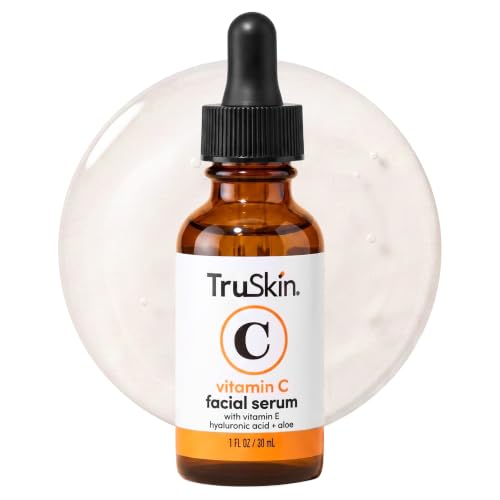
- GLOW, WHERE’D YOU GO? When skin looks dull, tired, or less bright than usual, this lightweight Vitamin C serum helps bri…
- BRIGHTENS & EVENS TONE DAILY: A stable, gentle form of Vitamin C (SAP) helps fade the look of dark spots, brighten dulln…
- A GENTLER VITAMIN C: Formulated with SAP, a stable, gentle form of Vitamin C designed to be tolerated daily, so you get …
The Ordinary Ascorbyl Glucoside Solution 12% — a 12% ascorbyl glucoside formula in The Ordinary’s no-frills style. Ascorbyl glucoside is one of the most forgiving vitamin C forms: water-soluble, stable, and pH-balanced enough for reactive skin. The thin watery texture layers under moisturizer without pilling. Best for: sensitive skin or anyone layering multiple actives.
- Pros: stable derivative, very low irritation risk, minimal price
- Cons: slow and steady rather than dramatic; no antioxidant partners (ferulic/E) in the formula

Bubble Skincare Day Dream Vitamin C + Niacinamide Serum — a Gen-Z brand formula that puts vitamin C, niacinamide, alpha arbutin, and ceramides in one bottle. This is the shortcut answer to the biggest pairing question in skincare (more on the vitamin C + niacinamide pairing below): instead of layering two serums, you get both in a researched ratio. Best for: anyone who wants vitamin C and niacinamide without the layering math.
- Pros: two brighteners in one step, ceramides support the barrier, fun brand
- Cons: combination formulas aren’t customizable — if your skin hates niacinamide, you can’t separate it out

- Turn Clear Skin Dreams Into Reality – This super unique combination of Vitamin C + Niacinamide is a scientific power cou…
- Boost Your Skin With Brightness – Vitamin C is a superfood antioxidant for your skin and an essential part of your routi…
- Revel in Radiance – Alpha Arbutin helps to visibly reduce the appearance of spots and uneven skin tone while Plant Deriv…
Potent 20% formulas (strongest glow per dollar)
Ready to go stronger? The 10–20% concentration range is where research shows vitamin C gets consistently effective for brightening. Going above 20% adds irritation without proportional gains — the dose-response curve flattens out. These three sit at or near the top of the effective range in budget bottles.
Seoul Ceuticals 20% Vitamin C + Hyaluronic Acid + CE Ferulic Acid — a Korean-beauty-style 20% formula built on SAP with the classic C+E+ferulic antioxidant trio. That trio matters: the vitamin E and ferulic acid chemically stabilize the vitamin C and roughly double its photoprotective performance against UV-generated free radicals, per the foundational stabilization research behind the original patent. Best for: maximum brightening power on a budget.
- Pros: 20% potency with derivative stability, ferulic acid stabilization, strong long-term sales record
- Cons: at 20% it can tingle on very reactive skin — patch test first

- THIS KOREAN SKIN CARE VITAMIN C serum contains the same potent, active ingredients as more expensive CE Ferulic Serums
- EXTREMELY EFFECTIVE – WE PROMISE you’ll begin to see results with this K beauty product within 3 weeks when used daily
- POTENT ANTI AGING, ANTI WRINKLE serum is proven to help reduce the appearance of wrinkles, fine lines & crows feet
ArtNaturals Vitamin C Serum — the classic 20% enhanced vitamin C with hyaluronic acid and vitamin E, in the familiar amber dropper. This is the archetypal Amazon budget brightener: straightforward formula, long track record, no gimmicks. Best for: a proven, no-surprises daily vitamin C.
- Pros: long-established formula, simple routine addition, hyaluronic acid offsets dryness
- Cons: classic dropper-bottle packaging — the fridge rule applies (see storage section)

- POWERFUL ANTI-AGING : Formula helps skin turn back the clock as Vitamin C, Hyaluronic Acid, and Vitamin E helps diminish…
- HYDRATES BRITHENS AND SOOTHES SKIN : With its uniquely designed, high:quality combination of botanical ingredients, incl…
- FAST:ABSORBING : Means no greasy residue, and makeup can be applied right after use.
Pura d’or 20% Vitamin C Serum — the value play: a 4-ounce bottle with 20% vitamin C plus retinol, hyaluronic acid, vitamin E, and ferulic acid. At four times the volume of most serums, the price per ounce is hard to beat. One important note: it contains retinol, so treat it as an evening product, and skip your separate retinoid on nights you use it. Best for: PM routines and anyone who wants vitamin C + retinol in one step.
- Pros: biggest bottle in the roundup, multi-active formula, excellent per-ounce value
- Cons: retinol content means evening use only; not for beginners stacking other retinoids
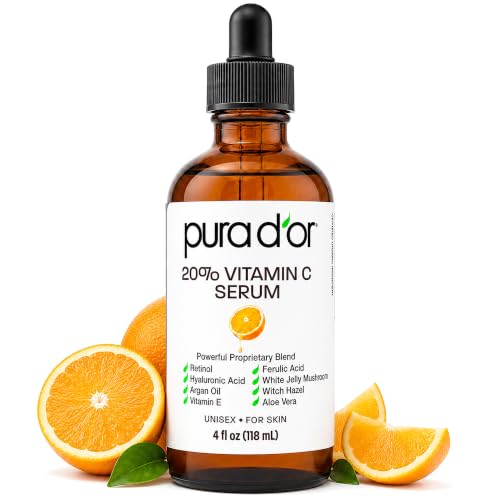
- POWERFUL 20% VITAMIN C SERUM: High-potency Vitamin C formulated with Ferulic Acid and Vitamin E to deliver antioxidant c…
- ANTI AGING SKIN CARE FORMULA: This refined facial serum supports smoother-looking texture and complements skincare routi…
- LIGHTWEIGHT HYDRATING FACE SERUM: Fast-absorbing Vitamin C formula with Hyaluronic Acid, Aloe Vera and Witch Hazel suppo…
The dark-spot booster
Advanced Clinicals Brightening Vitamin C Serum — vitamin C plus glycolic and lactic acids in one 1.75-ounce bottle. The alpha hydroxy acids add light exfoliation, which helps the vitamin C reach pigment sitting in uneven texture and rough spots. Think of it as brightening + resurfacing in a single step. Best for: dark spots, age spots, and rough, uneven tone rather than general dullness.
- Pros: dual-action brightening + exfoliation, generous size, dark-spot focus
- Cons: AHAs + vitamin C in one bottle is more active than a plain serum — start 3x/week and build up; not for freshly exfoliated or barrier-damaged skin

- VITAMIN C FACE SERUM ENHANCES RADIANCE FOR A GLOWING COMPLEXION – This Vitamin C serum helps improve the look of dull, l…
- VITAMIN C SERUM W/ FERULIC ACID, LACTIC ACID, & PEPTIDES – This illuminating blend helps to visibly improve uneven skin,…
- LIGHT GEL TEXTURE FOR RADIANT ILLUMINATED LOOKING SKIN – This lightweight gel facial serum glides effortlessly onto the …
How to read your serum: the oxidation color scale
This is the single most useful vitamin C skill, and nobody teaches it on the product page. Vitamin C’s whole job is handing electrons to oxygen — in the bottle, that same eagerness works against it. When ascorbic acid meets oxygen, it oxidizes in stages, and the color is the visible record of how far it’s gone:
- Clear to pale yellow: fresh and potent. This is what a new bottle should look like (naturally tinted oil-based formulas are the exception — compare against the color when new).
- Light yellow: early oxidation. Some activity remains, but the clock is ticking — move up your usage or your storage game.
- Orange: the active concentration has fallen below a meaningful level. It’s not dangerous, but it’s delivering no antioxidant or brightening benefit. Discard.
- Brown: the vitamin C has converted to inactive byproducts. Discard — and don’t try to “use it up.”
The dark secret: oxidized vitamin C breaks down into erythrulose, a compound similar to the active ingredient in self-tanners. It can temporarily tint the top layer of dead skin cells orange — which many people mistake for “vitamin C making my dark spots worse.” It’s surface staining, not new pigmentation, and it washes off. The fix is simple: replace the bottle instead of finishing it out of habit.
Packaging to look for: dark or amber glass, airtight (airless pump beats a dropper you open twice a day), and small bottles you’ll finish in 8–12 weeks. Storage: the fridge, not the bathroom — heat roughly doubles degradation, and UV light degrades ascorbic acid dramatically faster than dark storage. A hot-dog-like sulfurous smell means the formula has degraded regardless of color: discard.
How to pair it: niacinamide, sunscreen, and what to avoid
Can you use vitamin C with niacinamide? Yes. The old warning traces back to a 1960s study combining pure L-ascorbic acid with niacinamide at specific concentrations — it’s been over-extrapolated for sixty years. Modern stable derivatives sit at skin-friendly pH and don’t trigger that reaction. The practical rule: apply vitamin C first on clean skin, wait about 60 seconds, then layer niacinamide. Or just use a formula that already combines them (like the Bubble pick above).
Sunscreen is non-negotiable. Vitamin C is a bodyguard against UV-generated free radicals, not a shield — it doesn’t block UV. Worse, without sunscreen, UV depletes the vitamin C faster than your skin can rebuild the benefit. Morning routine order: cleanse → vitamin C → wait a minute → moisturizer → broad-spectrum SPF.
What to avoid when starting: don’t introduce vitamin C, a retinoid, and an exfoliating acid in the same week — you won’t know what’s helping and what’s irritating. Add one new active every 2–3 weeks. And if your skin barrier is damaged (stinging, flaking, tight), fix the barrier first; vitamin C on compromised skin can backfire into breakouts and worse-looking tone.
Morning or night? Morning is the classic slot, because vitamin C’s antioxidant protection pairs with daytime UV and pollution exposure. But a stable derivative used at night works fine too — consistency matters more than the clock. (The Pura d’or pick, with its retinol content, is the exception: evening only.)
How long until you see results
Set honest expectations and you’ll never feel scammed:
- Weeks 2–4: improved radiance, healthier glow, makeup sits better. This is the antioxidant protection kicking in.
- Weeks 6–12: mild dark spots and post-acne marks start visibly fading. This is the range dermatology sources cite for real brightening.
- Months 3–6: texture smoothing and fine-line softening from collagen support.
What vitamin C will NOT do: erase melasma or deep hormonal pigmentation (it isn’t strong enough — those need a dermatologist’s assessment), bleach skin, or replace sunscreen. If a product promises any of that, it’s lying.
How we chose these 7
We built this roundup around formulation science, not star ratings:
- Real Amazon listings, verified — every pick is a live amazon.com product page (titles page-confirmed or ASIN-corroborated), not a search-snippet guess.
- Budget ceiling — every pick must show a displayed price under $20 through Amazon’s own catalog data (verified at publication; cut if it doesn’t).
- Formulation variety — the list spans stable derivatives (SAP, ascorbyl glucoside) for beginners and 20% formulas for experienced users, plus one niacinamide combo and one AHA combo, so the list reads as a guide, not seven identical bottles.
- No invented claims — we don’t claim to have “tested” these in a lab, and we don’t invent ratings, review counts, or clinical results. Efficacy statements come from published formulation research cited in this article.
- Stability honesty — packaging and storage notes are included because, for vitamin C, the bottle matters as much as the formula.
Prices verified at publication (2026-10-19). Amazon prices shift; if a pick has drifted over $20 since, we cut or swap it rather than keep a stale price.
FAQs
Do cheap vitamin C serums actually work?
Yes — if they’re well-formulated. Vitamin C is a commodity ingredient: its brightening, antioxidant, and collagen-support effects depend on concentration and stability, not the price of the bottle. The real difference between a cheap serum that works and one that doesn’t is the vitamin C form, the packaging, and whether it’s still fresh. Read the color scale in this guide before judging any serum.
What percentage of vitamin C should I look for?
For L-ascorbic acid, research identifies 10–20% as the effective range. Below 10% is often too dilute for noticeable results; above 20% adds irritation without proportional gains. If you use a stable derivative (SAP, ascorbyl glucoside, 3-O-ethyl ascorbic acid), percentages aren’t directly comparable — judge by formula quality and how your skin responds, and start at the lower end if you’re sensitive.
My vitamin C serum turned orange. Is it safe to keep using?
It’s not dangerous, but it’s done working. Orange means the active vitamin C has oxidized into inactive byproducts (including erythrulose, which can temporarily stain skin). You’ll get no brightening benefit and possible cosmetic staining — replace the bottle.
Can I mix vitamin C with niacinamide?
Yes. The “never mix” rule is an outdated myth from a 1960s study. Modern stable formulas work fine together — apply vitamin C first, wait about a minute, then niacinamide. Or use a single serum that already combines both.
Can I use vitamin C with retinol?
Not in the same application if both are strong — layering a potent vitamin C and a retinoid together is a common irritation trigger. The simplest schedule: vitamin C in the morning (under sunscreen), retinol at night. The Pura d’or pick in this list already contains retinol, so use it in the evening and skip your separate retinoid those nights.
How long until vitamin C fades dark spots?
Expect visible fading of mild dark spots and post-acne marks in 6–12 weeks of consistent daily use, with a healthier glow in 2–4 weeks. Deep melasma and hormonal pigmentation need more than an over-the-counter serum — see a dermatologist rather than chasing stronger percentages.
Bottom line
Cheap vitamin C serums work — but only the stable, fresh, well-packaged ones, used daily under sunscreen for at least two months. Pick a gentle derivative if you’re starting out (TruSkin, The Ordinary, or the Bubble combo), go 20% when you’re ready for more (Seoul Ceuticals, ArtNaturals), and learn the color scale so you never pay for a bottle of orange nothing.
Building the routine around it? Our fall skincare routine under $30 slots vitamin C into a complete morning-and-night lineup, and our affordable beauty finds for fall has more budget staples that pair well with it. New to makeup too? Start with our beginner makeup kit under $50.