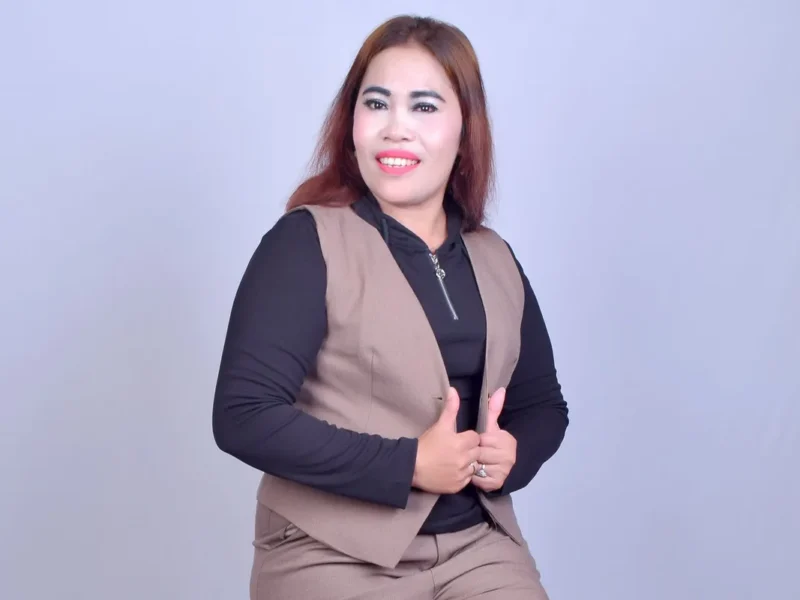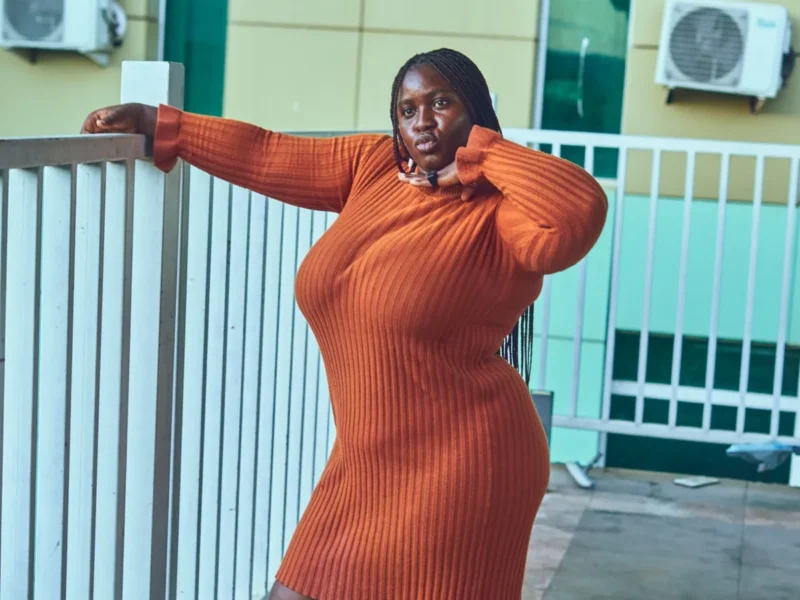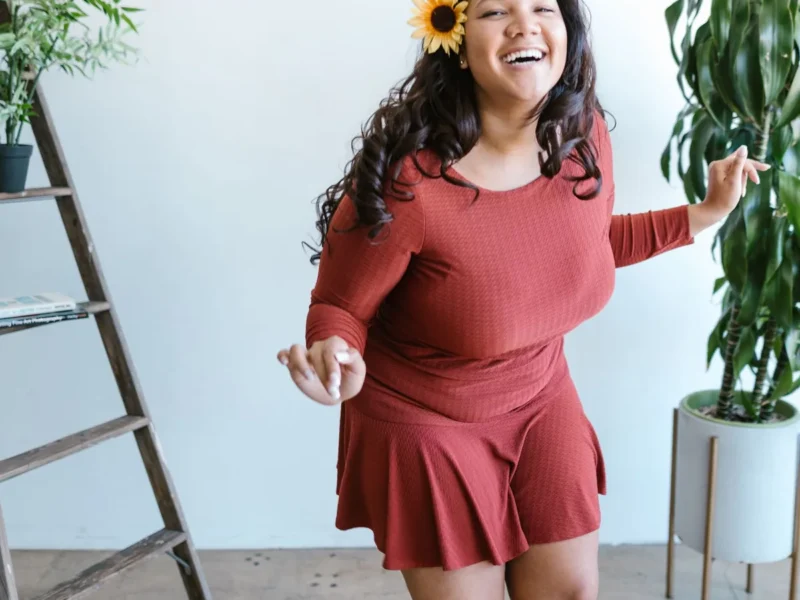
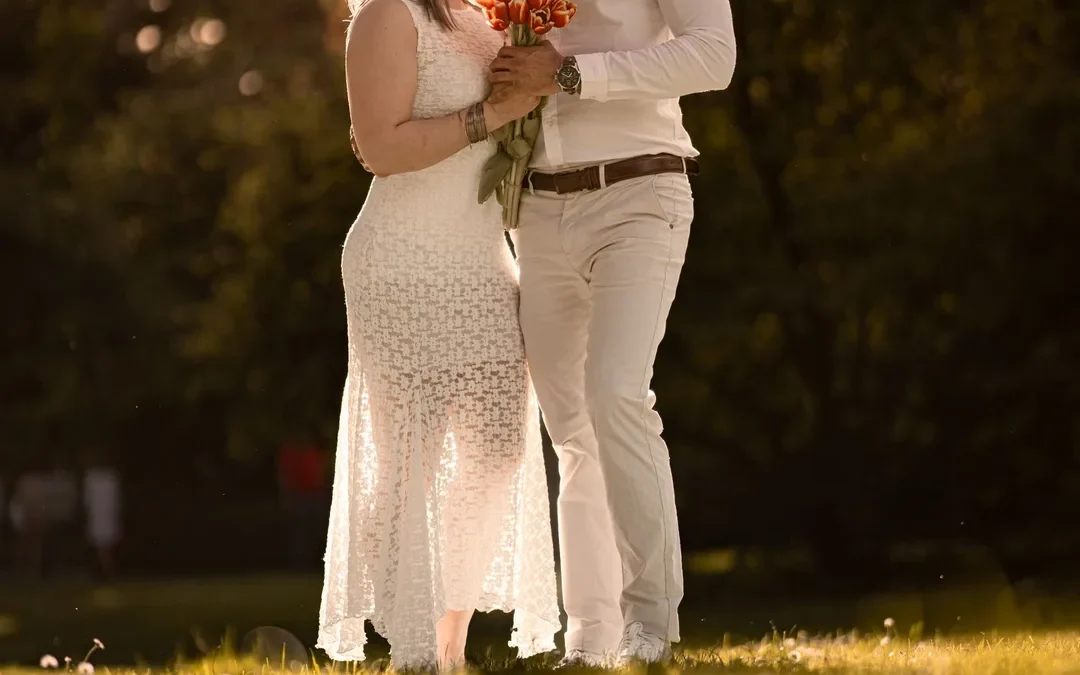
You just got engaged, the photographer is booked, and now comes the question every couple asks first: what do we wear for engagement photos? It sounds simple until you stand in front of the closet. The photos from this one afternoon will land on your save-the-dates, your wedding website, and probably a frame on the wall for the next few decades — so the outfit matters more than it feels like it should.
Here is the good news: getting engagement photo outfits right has almost nothing to do with spending a lot. It comes down to color, fit, and setting far more than to buying something new. Photographers who shoot couples for a living keep giving the same advice, and it is refreshingly practical: coordinate with your partner instead of matching, pick colors that work against your backdrop, choose fabrics that move, and do a quick photo test before the session.
This guide is built around that advice. First, the photo-readiness decoder: the 60-second photo test, the color-vs-backdrop rules, how to coordinate as a couple, and the honest answer to the white-dress question. Then 7 engagement photo outfits under $50 from Amazon — a cozy knit, boho beach midis, satin slips, a one-shoulder, and a vintage floral — grouped by the job each one does in front of the camera. Every price below was verified on the live Amazon listing at publish time; prices change, so check the listing before you buy.
As an Amazon Associate, Fashibly earns from qualifying purchases made through the links in this article, at no extra cost to you.
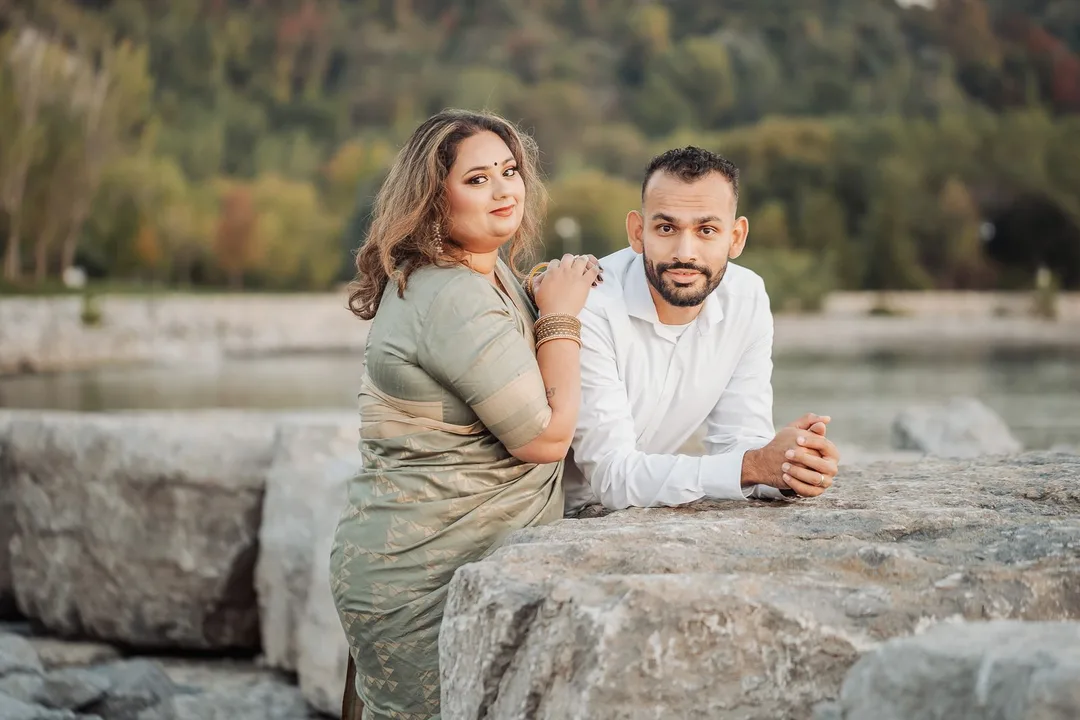
The 60-Second Photo Test: Sit, Stand, Walk, Spin, Photo
Before you commit to any engagement photo outfit, run it through this test at home. It takes a minute, and it catches almost every problem that shows up later in the gallery.
Sit. Sit on a chair the way you will sit on a park bench or a stone wall. Does the neckline gap? Does the skirt ride up past where you are comfortable? Does the fabric bunch into hard creases at the waist? If you spend the session tugging, the camera sees it.
Stand. Stand tall and look at the silhouette in a full-length mirror. A good engagement photo outfit reads as one clean shape from head to toe. If the dress needs a belt, a layer, or constant adjusting to hold its shape, it is working against you.
Walk. Walk across the room at a normal pace, then up and down a few steps if you can. Long hems catch on grass, gravel, and uneven ground. A midi that brushes your calves is the easiest length for outdoor sessions; a maxi is gorgeous in an open field but needs a hem you can lift without thinking.
Spin. Turn around once, slowly, the way a photographer will ask you to. This is the moment flowy fabrics earn their keep. Chiffon, tulle, and A-line skirts catch air and make a still photo feel alive. A stiff or very clingy skirt just turns with you and falls flat.
Photo. Take a phone photo of yourself in the outfit, outside, in the kind of light your session will use. Phone photos lie less than mirrors do. Look for the things the camera will find: a neckline that gapes, a pattern that shimmers, a color that washes you out, a white that blows out to pure brightness. If anything bothers you in the phone photo, it will bother you more in the real gallery.
If an outfit passes all five, it is ready. If it fails one, you usually know within seconds — and it is far better to know at home than at the park.
Color vs Backdrop: The Background Is Half Your Palette
The most common engagement-photo mistake is choosing colors without thinking about where you will stand. Your background is half the palette, so dress to complement it, not blend into it and not fight it.
Fall park or woodland. Autumn leaves are amber, copper, and gold. Burgundy, forest green, plum, deep teal, warm cream, and camel all sit beautifully against them. Plum and olive are a popular pairing this fall — a plum dress with an olive layer or accessory photographs richly against amber leaves. Avoid orange and bright yellow — they merge with the leaves instead of standing apart from them, and the couple disappears into the background.
Open field or golden hour. Low, warm light is flattering to almost everyone, and rust, camel, cream, and dusty rose glow in it. Soft neutrals photograph especially well here because the light does the work.
City street or downtown. Deeper, richer tones hold up against concrete, glass, and grey: navy, burgundy, emerald, charcoal. A cream or camel layer keeps the look from going too dark.
Beach or waterfront. Soft and airy wins: white, sand, pale blue, blush, and flowing fabrics that catch the wind. Skip bright white on a blazing sunny day at the water — it blows out in photos. Cream or off-white photographs softer.
Snow or winter. Jewel tones stand out against snow: deep crimson, evergreen, plum, navy. A long coat or a knit layer is part of the outfit here, and a burgundy or forest-green dress under a camel coat is one of the most photogenic winter combinations there is.
Indoor café or studio. You control the backdrop, so pick the palette first and let the setting follow. Warm neutrals and one accent color photograph cleanly against plain walls, brick, and wood.
The rule that ties it together: pick two or three colors total, in muted or earthy versions, and let the backdrop supply the rest. Earthy versions of any color almost always beat their loud, saturated cousins on camera — saturation that looks fun in person can shout in a photo.
Coordinate, Don’t Match: How Couples Actually Dress for the Camera
Ask any wedding photographer what couples get wrong most often and the answer is the same: matching too hard. Two white T-shirts and two pairs of blue jeans read as a uniform, and the photos date instantly. The opposite mistake is just as common: two outfits chosen separately that fight each other on color and formality.
The sweet spot is coordination. Both outfits come from the same small palette, but in different shades, textures, and shapes. Photographers describe it as harmony, not a uniform. Here is the formula that works in almost every setting:
- One anchor neutral — cream, camel, charcoal, navy, or soft grey. This is your foundation and the safest large area of fabric.
- One accent color — sage, rust, dusty blue, burgundy, mustard. This is the personality of the set.
- One bridge tone — a muted shade that sits between the two, used in a scarf, a knit, a jacket, or shoes to tie the looks together.
Then split the palette across the two of you. One of you wears the accent color, the other wears the neutral with one small piece in the accent — a tie, a pocket square, a scarf, a knit. Never wear the same color on both torsos: when you both wear the same shade up top, the camera reads you as one shape instead of two people. And match the formality level. If one of you is in a flowing maxi dress and the other is in a T-shirt, the photos feel like two different events.
A practical example for a November park session: she wears a burgundy midi dress, he wears cream with a burgundy tie or a burgundy knit under a charcoal jacket. For a beach session: she wears a cream or blush flowy maxi, he wears a light-blue linen shirt and khaki chinos.
Can I Wear White for Engagement Photos? The Honest Answer
Yes — with one condition. White works for engagement photos when it reads as soft and romantic, not as a wedding rehearsal. The difference is texture, tone, and shape.
A white sundress, an eyelet midi, a casual linen dress, or a cream slip with visible texture feels like an engagement, not a ceremony. The look tips bridal when the dress is long, structured, formal, and bright optic-white — the exact cues your wedding gown will carry — and then the photos can feel like a preview you did not intend.
There is also a camera reason to prefer cream and ivory over true white. Pure bright white blows out in strong sun and photographs with blue shadows, losing detail. Warmer off-whites stay soft and flattering.
If white feels like you, wear it — in a casual, textured, easy silhouette. If it does not, a soft sage, terracotta, dusty blue, or blush gives you the same fresh, photogenic effect without any bridal echo. Note: this guide’s seven picks lean on soft neutrals and blues instead — there is no white dress in the list — so if white is your call, bring your own favorite and run the light test before the session.
What to Avoid in Engagement Photos
Photographers agree on this list more than on almost anything else:
- Logos and slogans. They date the photo and pull the eye straight off your faces.
- Neon and ultra-bright colors. Neon casts colored light onto skin — a red shirt can give you a sunburned glow in photos — and pulls focus away from your faces.
- Tiny busy patterns. Thin stripes and small checks create a shimmering moiré effect on camera sensors. Solids or large, soft patterns (a wide floral, a broad stripe, a bold plaid on one of you) are safe.
- Pure bright white in full sun, and all-black-on-all-black. White blows out; all-black loses body separation and shape in shadow. Cream, ivory, charcoal, and deep navy solve both.
- Stiff, wrinkly, or very clingy fabrics. They fight movement and show every crease. Textured fabrics — knit, linen, chiffon, soft denim — catch light and move with you.
- Brand-new shoes you have never broken in. A 1–3 hour session on grass, gravel, or trails in new heels is a recipe for sore feet and stiff poses. Wear real shoes to walk in and bring the photo shoes to swap in right before the shot.
- Ultra-trendy pieces. This year’s trend is next year’s “what were we wearing.” Classic shapes in muted colors age well in an album.
- More than one statement accessory. A hat, a scarf, or statement earrings — pick one, not all three.
The 7 Engagement Photo Outfits at a Glance
Comparison table (7 rows):
| # | Dress | Best for | Price |
|---|---|---|---|
| 1 | ZESICA Slit Knit Long-Sleeve Bodycon Sweater Dress, cream | Fall park, golden hour, city | $29.99 |
| 2 | GRACE KARIN Boho Beach Midi, cream/beige | Park, garden, beach, golden hour | $29.99 |
| 3 | GRACE KARIN Boho Beach Midi, rust with white dots | Fall park, golden hour, field | $39.99 |
| 4 | Uoirzue Cowl-Neck Satin Slip Midi, dusty blue | Golden hour, evening, city | $39.99 |
| 5 | SITELUOYG Satin Silk Slip Midi, navy blue | Evening, city, candlelight feel | $44.99 |
| 6 | BTFBM One-Shoulder Ruched Wrap Midi, grey blue | City, evening, dressy look | $28.34 |
| 7 | Belle Poque Vintage A-Line Midi, light blue daisy print | Garden, park, golden hour, movement | $37.59 |
Prices shown are the verified prices on the live Amazon listing at publish time. Check the listing before you buy — prices change.
Group 1: Fall Knits — Warm, Textured, Made for November
November engagement sessions run cool — golden hour in fall is often in the 45–65°F range, and the outfits that hold up are the ones with texture and a layer built in. Knit dresses photograph beautifully because the texture catches light without shining, and they move with you instead of fighting you.
1. ZESICA Fall Slit Knit Long-Sleeve Bodycon Sweater Dress — the cream knit
A long-sleeve bodycon sweater dress in cream, with a slit detail that makes walking easy. This is the cozy-elevated pick: the knit has enough texture to read as detail in photos rather than flat fabric, and cream is one of the softest neutrals on camera — warm against autumn leaves, gentle in golden-hour light, and easy to coordinate with almost anything your partner wears.
Pros: Long sleeves solve the cold-session problem without a coat; the slit keeps the slim fit walkable on grass and gravel; cream pairs with navy, charcoal, camel, olive, or rust on your partner’s side.
Cons: Bodycon means the fit has to be right — size up if you are between sizes, and run the sit test carefully, since a slim knit shows every pull when you sit. Cream can wash out in harsh midday sun, so this one is best at golden hour or in soft, open shade. Check the slit height in the sit test before the session.
Fit and photo notes: Slim bodycon fit with a slit. Best for a fall park, a city street, or an indoor session rather than a muddy woodland walk. A heel or a sleek boot completes it; avoid a chunky boot that fights the slim line.

Group 2: Boho Beach Midis — Easy, Flowy, Photo-Ready
Boho midis are the easy win for engagement photos: the cut is relaxed, the fabric moves, and the midi length is the most practical hem for outdoor sessions. Both picks in this group are the same easy silhouette in two very different color stories — a soft cream-beige neutral and a warm rust — so you can choose the one that fits your backdrop.
2. GRACE KARIN Boho Beach Midi — the cream-beige neutral
A flowy boho beach midi in cream and beige. The soft neutral palette is the point: cream and beige photograph gently in almost any light, they never fight the backdrop, and they give your partner a wide range of colors to coordinate with — navy, olive, dusty blue, charcoal, or rust all work.
Pros: The neutral colorway is the most forgiving in this guide — it works in a park, a garden, on a beach, and at golden hour; the midi hem works with boots, heels, or flat sandals depending on the setting; the easy boho cut is comfortable through a 1–3 hour session.
Cons: A soft neutral can wash out in harsh midday sun, so aim for golden hour or open shade. The relaxed boho cut needs the stand test — if it reads shapeless in a full-length mirror, a belt or a layer at the waist gives it structure.
Fit and photo notes: Midi length, relaxed boho fit. A strong pick for a garden, a park, a beach, or a golden-hour field. Keep your partner in a solid color with one warm accent so the two outfits do not drift into beige-on-beige.

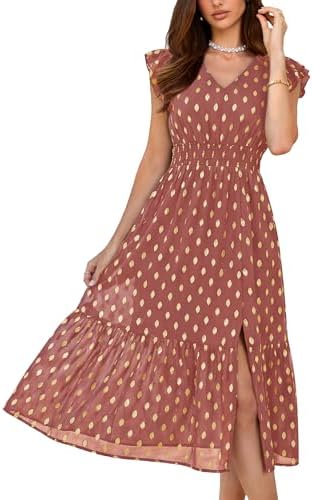
3. GRACE KARIN Boho Beach Midi — the rust with white dots
The same easy boho midi silhouette, in rust with a white dot pattern. Rust is one of the strongest fall photo colors there is — it glows in golden-hour light and sits beautifully against amber and copper leaves without blending into them — and the white dots give the dress a pattern with personality.
Pros: Rust photographs with warmth and depth in autumn light; the dot pattern adds interest without a busy floral; the midi hem is practical for grass, gravel, and uneven ground; the relaxed fit is comfortable for a long session.
Cons: Small dot patterns deserve the phone-photo test — dots can shimmer on camera sensors, so check for it in the actual session light before the day. Rust is a warm statement, so your partner should wear cream, camel, or charcoal — not another warm print.
Fit and photo notes: Midi length, relaxed boho fit. This one pairs naturally with a cream or camel partner outfit and works in fall parks, open fields, and golden-hour sessions. The skirt moves well on the spin test.
Group 3: Satin Slips — Golden-Hour Glow
Satin is the fabric photographers warn about and love in equal measure. It catches light like nothing else, which is why it glows at golden hour — and why it can reflect oddly in harsh flash or direct sun. These two satin picks are for golden-hour, evening, and city sessions, where the light is low and warm and satin does its best work.
4. Uoirzue Cowl-Neck Satin Slip Midi — the dusty-blue glow
A spaghetti-strap satin midi with a cowl neckline in dusty blue. The cowl neck drapes softly at the neckline, the satin has a gentle sheen rather than a hard shine, and dusty blue is one of the most flattering photo colors there is — it works against green, grey, stone, and water.
Pros: The cowl neck is elegant in close-up portraits; dusty blue pairs with almost any partner outfit (cream, charcoal, navy, camel); the slip silhouette is light and moves well.
Cons: Satin shows every crease, so steam or press it before the session and avoid sitting on rough surfaces. The spaghetti straps mean you need a layer for a cold November session — a cardigan or a jacket that you can slip off for the shot.
Fit and photo notes: Midi length, slip fit. Best at golden hour or in soft evening light, where the satin glows instead of glaring. Do the phone-photo test in the actual light you will shoot in — satin is the fabric most worth testing beforehand.

5. SITELUOYG Satin Silk Slip Midi — the navy evening slip
A spaghetti-strap satin silk slip midi with a cowl neckline in navy blue. Navy is flattering on nearly every skin tone, it pairs with almost anything your partner wears, and it holds up beautifully against city backdrops and evening light.
Pros: Navy photographs as a rich, deep color without the shape-loss risk of pure black; the cowl neck drapes elegantly; the slip silhouette is easy to move in and easy to layer under a coat.
Cons: Like all satin, it creases — press it and carry it carefully to the session. The adjustable straps are a plus, but set them at home and leave them alone; re-adjusting straps mid-session shows in the photos.
Fit and photo notes: Midi length, slip fit. A strong evening and city pick, and a good choice if your session runs into dusk. Pair with a cream or camel coat for the walk between locations.

Group 4: One-Shoulder — The Dressy Asymmetric
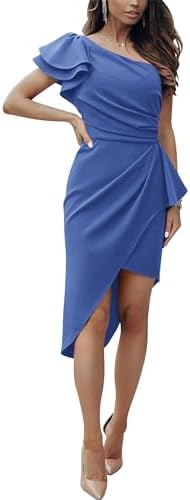
6. BTFBM One-Shoulder Ruched Wrap Midi — the dressy grey-blue
A one-shoulder ruched wrap midi with a ruffle sleeve in grey blue. The one-shoulder line is asymmetric, which gives the photographer a strong silhouette to work with, and the ruched wrap defines the waist while the ruffle sleeve softens the shoulder.
Pros: The one-shoulder shape stands out in a gallery of symmetrical outfits; grey blue is a muted, photogenic tone that works against stone, water, and greenery; the wrap fit is adjustable.
Cons: One-shoulder dresses need a sit test — the single strap can shift when you sit or lean. The ruched fabric is fitted, so size carefully and check the back view in a mirror before the session.
Fit and photo notes: Midi length, wrap fit. Best for a city or evening session where the dressy shape matches the setting. Keep your partner in a simple, well-fitted shirt and trousers so the asymmetry stays the star.
Group 5: Vintage Floral — The Movement Pick
7. Belle Poque Vintage A-Line Midi — the light-blue daisy print
A sleeveless vintage A-line midi in light blue with a daisy print. The A-line skirt is the shape that earns its keep on the spin test — it catches air and makes a still photo feel alive — and the daisy print is large-scale and soft, which photographs as a pattern with personality rather than noise. Light blue is one of the most forgiving photo colors, working against green, grey, stone, and water.
Pros: The A-line shape flatters most frames and moves beautifully on the spin test; the daisy print is a classic floral that will not date the photos; light blue pairs with almost any partner outfit (cream, navy, charcoal, camel).
Cons: Sleeveless in November means you need a layer — a cardigan, a denim jacket, or a shawl — for the walk between shots. The floral is the personality of the dress, so keep your partner in a solid neutral and accessories minimal.
Fit and photo notes: Midi length, A-line. Run the spin test at home: this is the dress most likely to pass it with flying colors. For a fall session, the light blue sits well against green and gold backdrops.

What He Wears: The Coordination Box (Styling Tips, No Extra Shopping)
The picks above are women’s dresses — but half of every engagement photo is your partner, so his outfit deserves the same five minutes of thought. No new shopping required; these are styling notes for clothes he probably already owns.
- Start from her dress, not his closet. Pick the palette from her outfit first, then build his look from the same 2–3 colors. If she is in burgundy, he wears cream or charcoal with one burgundy accent. If she is in cream, he wears navy or olive.
- Same formality, different pieces. If she is in a flowing maxi, he wears a button-down and chinos or dark jeans — not a T-shirt, not a suit. If she is in a knit midi, he wears a knit sweater or a shirt with a jacket. The two outfits should look like they belong to the same afternoon.
- Texture over pattern. A linen shirt, a knit sweater, a soft denim jacket — textures photograph well and do not fight her dress. Avoid his loudest patterned shirt, and never put a busy print on both of you at once.
- The bridge piece. One small item in her accent color ties the pair together: a tie, a pocket square, a scarf, a knit in her color. It is the cheapest coordination trick there is, and it is the one photographers notice most.
- Shoes he can walk in. A 1–3 hour outdoor session covers real ground. Clean boots, loafers, or smart sneakers he has already broken in — not brand-new dress shoes, not battered trainers. Darker-wash jeans photograph cleaner than light-wash or distressed denim.
- One layer each. A jacket, a coat, or a knit each gives the photographer a second look without an outfit change — layer on for the walk, layer off for the portrait. A long coat over her dress and his jacket is the classic November engagement frame.
How We Chose These 7 Engagement Photo Outfits
We started from what wedding and engagement photographers actually tell their clients, not from a trend list. The guides we read agree on the same rules: coordinate instead of matching, choose colors against the backdrop, prefer textured fabrics that move, and avoid logos, neon, tiny patterns, and pure bright white in hard sun. We shaped the picks around those rules.
Each dress below was chosen because its listing shows a real product page with a displayed price under $50 at publish time, in a colorway that fits the photo rules above. We did not test these dresses, and we do not claim to have worn or photographed them. Fit and length notes come from the listing descriptions and the general fit guidance photographers give for each silhouette — check the size chart on the listing before you buy, and run the 60-second photo test at home when it arrives. Prices change; the price on the listing at the time you buy is the price that counts.
Shopping Tips for Engagement Photo Outfits
- Order early, test at home. Buy at least two weeks before the session so you can run the 60-second photo test, steam or press the dress, and exchange the size if needed. Photographers recommend sending your photographer a photo of the outfit before you buy it — a two-minute message can save a bad choice.
- Bring two looks if you want variety. One dressy look and one casual look is the practical maximum for a 1–3 hour session. A knit midi plus a boho midi, or a satin slip plus a cozy knit, gives the gallery range without eating the whole session in outfit changes.
- Steam, don’t just hang. Satin, chiffon, and tulle show every shipping crease. Steam the dress the night before and hang it — don’t fold it into a bag on the morning of the shoot.
- Check the weather the night before. A November session can swing 20 degrees between afternoon and golden hour. A coat, a knit, or a shawl that matches the palette is part of the outfit, not an afterthought — and a long coat over a dress is one of the most photogenic winter frames there is.
- Think about the photos after the shoot. The best engagement photo ends up on a save-the-date, a wedding website, and a wall. Classic shapes in muted colors age well; this year’s trend does not. If you would not want to look at it in ten years, don’t wear it for the shoot.
FAQs: Engagement Photo Outfits
What should I wear for engagement photos?
Wear an elevated version of what you already wear: comfortable, coordinated with your partner (not matching), and suited to the place where you are shooting. Pick a shared level of formality, a two- or three-color palette, and fabrics that move. Dresses and skirts tend to photograph best because they flatter the figure and bring movement to the frame — a long, flowy dress is a strong default, and a knit midi or a satin slip works just as well in the right light.
Can I wear white for engagement photos?
Yes, when it reads as soft and romantic rather than like a wedding rehearsal. A white sundress, an eyelet midi, a casual linen dress, or a cream slip with visible texture feels like an engagement; a long, structured, bright-white gown can feel like a wedding preview. Choose ivory or cream over pure white when you can — true white photographs with blue shadows and can blow out in sun, while warmer off-whites stay soft and flattering. If white does not feel like you, sage, dusty blue, blush, or terracotta give the same fresh effect. Note: this guide’s seven picks contain no white dress — they lean on cream, beige, and soft blues instead — so if white is your call, bring your own and test it in the session light first.
Should couples match in engagement photos?
No — coordinate, don’t match. Matching outfits (identical shirts, the same color on both torsos) read as a uniform and date the photos. Instead, pick a shared palette of two or three colors and let each person wear a different piece of it: one of you leads with the accent color, the other leads with a neutral and carries the accent in a small piece like a tie, a scarf, or a knit. Photographers put it simply: you want harmony, not a uniform.
What colors photograph best in engagement photos?
Soft, muted, and earthy tones photograph best in almost every setting: cream, oatmeal, sage, dusty blue, terracotta, blush, camel, and charcoal. For fall, burgundy, forest green, plum, and rust are the strongest choices; for winter, deep jewel tones stand out against snow; for the beach, soft neutrals work best. Match the colors to your location, and avoid neon and large bright-white blocks, which the camera tends to blow out.
What should men wear for engagement photos?
A button-down shirt or a knit sweater with chinos or dark-wash jeans, at the same formality level as his partner’s outfit. A jacket or a sport coat adds a layer for cold sessions and a second look for the gallery. Keep it simple: solid colors or subtle texture, no logos or loud patterns, and shoes he can actually walk in for an hour or two outdoors. One small piece in her accent color — a tie, a pocket square, a knit — ties the two outfits together without matching.
What should you avoid wearing for engagement photos?
Skip visible logos and large graphics, neon and ultra-bright colors, ultra-trendy pieces that will date the photos, and brand-new shoes that change how you stand and walk. Avoid tiny busy patterns like thin stripes and small checks, which can create a shimmering moiré effect on camera, and be careful with pure bright white in full sun and all-black outfits in low light — cream, ivory, charcoal, and deep navy photograph more reliably. And keep accessories to one statement piece: a hat, a scarf, or statement earrings, not all three.
The Bottom Line
Engagement photos are not a fashion test — they are a record of the two of you, at the start of something, in clothes that let you look like yourselves on a good day. The dresses in this guide all cost under $50, and any one of them can carry a session if it passes the photo test: sit, stand, walk, spin, photo. Pick your backdrop first, build a two- or three-color palette with your partner, choose a fabric that moves, and wear the color that makes you feel like you.
If you want one safe default for a November shoot, make it the cream slit-knit bodycon (pick 1): warm, textured, and easy to coordinate — navy or charcoal for him, cream for you. If you want movement, make it the vintage floral A-line midi (pick 7) and let the spin do the work. And if white is calling your name, note that this list has no white dress — the closest soft neutrals are the cream knit (pick 1) and the cream-beige boho midi (pick 2) — so bring your own white favorite in a casual, textured silhouette and run the light test first.
For more occasion dressing, see our rehearsal dinner dresses under $50, our bridal shower dresses under $50, our baby shower dresses under $50, our cocktail attire for wedding guests, our fall dresses under $50, our petite dresses under $50, and our best Amazon wedding guest dresses under $50.