

Teacher outfits for women have one job that most work clothes never face: they have to survive a school day. Not a desk day — a real one, with seven hours on your feet, a whiteboard to reach, a floor to sit on during reading time, a playground to cross in November wind, and a student who will, at some point, wipe something unidentified on your sleeve. The best teacher outfits for women under $50 are built for exactly that day — comfortable teacher clothes that still look polished when a parent walks in unannounced, with pockets where you need them, fabrics you can wash at home, and shoes that do not punish you by 2pm.
This is not a dress roundup. We already covered teacher dresses on their own, and dresses are only one answer to the classroom question. This guide is about outfit formulas: a comfortable base, a polished top, a layer you can take off when the classroom turns into a sauna, and shoes made for standing. Twelve pieces, each under $50 on Amazon, that mix into four ready-to-copy formulas for the four kinds of days teachers actually have — the regular teaching day, playground duty, parent conferences, and casual Friday. Every piece was chosen against the same classroom test, which you can run on anything already in your closet in sixty seconds (it is below, and it is the most useful part of this article).
As an Amazon Associate, Fashibly earns from qualifying purchases made through links on this page, at no extra cost to you. Prices below were verified on the day of publishing and can change on Amazon — always check the listing before you buy.
Why Most Workwear Advice Fails Teachers
Standard business-casual advice assumes a desk, a climate-controlled office, and a dry cleaner. Teaching assumes none of those things, and the mismatch shows up in the details other guides never mention. A silk blouse is beautiful until a seven-year-old hugs you with paint on their hands. A structured blazer looks sharp until you spend twenty minutes crouched beside a student desk and the shoulders pull. A pencil skirt is elegant until you have to sit cross-legged on a classroom rug. The teachers who dress best for this job follow a different order of priorities, and it is worth stating plainly because it shapes every pick in this guide: machine-washable first, polished second. If a piece cannot survive your washing machine, it does not belong in a daily rotation, no matter how good it looks on the hanger. School buildings add their own rule — they are freezing in the morning and warm by afternoon, or the other way around depending on the wing — so layers you can remove without unravelling the outfit matter more than any single statement piece. That is also why this guide is organised by formula rather than by garment. A formula is a repeatable combination: base plus top plus layer plus shoes. Learn four of them and getting dressed takes five minutes, because the decisions are already made. The twelve pieces below are the building blocks; the formulas near the end show how they combine.
The 60-Second Classroom Comfort Test
Before any outfit earns a place in your teaching rotation, run it through this test at home. It takes a minute, and it catches almost every problem that only shows up at 10am in front of thirty students. Put the outfit on, then do each of these in order:
- Sit. Sit in a normal chair, then sit on the floor. Does the waistband dig? Does the skirt ride up past where your dress code allows? Does the top gap at the buttons?
- Floor. From sitting on the floor, stand up without using your hands on the ground for balance the way you would in front of a class. Anything that restricts your knees or pulls across the hips fails.
- Bend. Bend forward as if you are leaning over a student desk. Check the neckline, the back of the waistband, and whether the top rides up.
- Reach. Reach both arms up to a whiteboard. Sleeves should not slide into your work, shoulders should not bind, and the hem should stay put.
- Walk. Walk briskly down a hallway and up a flight of stairs. Shoes should stay secure on your feet without your toes gripping, and trouser hems should not catch under your heels.
If an outfit passes all five, it is classroom-ready. If it fails one, you now know exactly what to fix — a longer top, a different shoe, a skirt with more ease — instead of discovering it mid-lesson. Every pick below was chosen because its cut and fabric give it a fair chance of passing: stretch where you move, elastic or pull-on waists where you sit, midi lengths where you bend, and flats under the two-inch ceiling that experienced teachers swear by.
The 12 Pieces at a Glance
| # | Piece | Best for | Price |
|---|---|---|---|
| 1 | GRACE KARIN lightweight cardigan with pockets | Everyday layering | $28.99 |
| 2 | NIUBIA knit sweater vest, V-neck, button-down | Fall layering, trending look | $39.98 |
| 3 | Zeagoo wrinkle-free long-sleeve button-down | The no-iron base top | $14.99 |
| 4 | siliteelon classic-fit dress shirt, wrinkle-free stretch | The reliable button-down | $17.99 |
| 5 | Amazon Essentials ponte pull-on ankle pants | Teaching-day trousers | $18.90 |
| 6 | IUGA stretchy wide-leg work pants | Wide-leg formula | $33.99 |
| 7 | Stelle bootcut stretch work pants with pockets | Bootcut formula | $38.99 |
| 8 | Basoteeuo black pleated midi skirt, elastic waist | Conference polish | $23.99 |
| 9 | DREAM PAIRS chunky platform loafers | All-day shoes | $38.99 |
| 10 | DREAM PAIRS foldable knit ballet flats, arch support | Desk-drawer backup flats | $28.99 |
| 11 | DREAM PAIRS Mary Jane ballet flats, ankle strap | Observation-day flats | $31.99 |
| 12 | GRECERELLE sleeveless sweater vest, 100% cotton | Breathable layering | $14.99 |
Prices shown are the prices displayed by Amazon at verification time and can change on Amazon. If a size or colour you want shows a different price, that is normal — Amazon prices vary by size and colour, so check your exact combination before buying.
Tops: The Base Layer That Does the Work
A teacher’s top has to do three things at once: look intentional from across a classroom, move when you reach and bend, and survive the wash. That rules out most dry-clean-only blouses and anything sheer enough to need a camisole underneath. Both tops below are wrinkle-free button-downs, because a button-down is the most versatile base in a teacher wardrobe — it tucks, it layers under vests and cardigans, it looks finished on its own, and it reads as professional in every grade level from kindergarten to high school.
3. Zeagoo Wrinkle-Free Long-Sleeve Button-Down — the no-iron base top

The single most useful property of this shirt is in its name: wrinkle-free. Teachers get dressed early, and a shirt that comes out of the dryer looking pressed is worth more than a prettier shirt that needs ironing at 6am. The long sleeves roll neatly to the elbow for art days and science labs, and the collared cut keeps the outfit reading as professional even when the rest of it is soft and comfortable.
Pros: wrinkle-free fabric; long sleeves that roll easily; collared and polished; layers cleanly under cardigans and sweater vests.
Cons: a white or very light colour will show marker and lunch-duty stains fast — pick a darker colour or a print for messy days; fit is a straight classic cut, so if you prefer a shaped waist you will want to half-tuck it.
Fit note: true to the brand’s size chart; size up if you want room to reach overhead without the buttons pulling.
Wear it with: the ponte pull-on pants and the lightweight cardigan for the standard teaching day, or tucked into the pleated midi skirt for parent conferences.
4. siliteelon Classic-Fit Dress Shirt, Wrinkle-Free Stretch — the reliable button-down

This is the shirt to buy when you want one button-down you can reach for without thinking. The listing carries a best-seller badge in women’s button-down shirts, which in practice means it has been bought and re-bought by a lot of working women — the kind of quiet proof that matters more than any trend. The stretch in the fabric is the point for teaching: it gives when you bend over a desk instead of pulling at the buttons, and the classic fit sits neatly under a sweater vest without bunching.
Pros: stretch fabric that moves with you; wrinkle-free; classic fit that layers well; a proven, widely-bought staple.
Cons: the classic fit is not relaxed — if you are between sizes and plan to wear it untucked over trousers, consider sizing up; darker colours are the safer choice for stain-prone days.
Fit note: high-stretch fabric; the shirt keeps its shape through the wash, but check the size chart rather than assuming your usual size across brands.
Wear it with: the wide-leg work pants and the cotton sweater vest for a fall formula, or under the chunky cardigan on cold mornings.
Layers: The Pieces That Fix Classroom Temperature
If there is one category that earns its keep in a teacher wardrobe, it is layers. Classrooms are famously either freezing or a sauna, sometimes both before lunch, and the layer is what lets you adapt without changing the outfit. A good teacher layer has pockets — for a marker, a hall pass, your keys — and it should be something you can throw on over anything without a second thought. All three layers below have pockets or an open front that makes them easy to wear, and all three cost less than a single department-store cardigan.
1. GRACE KARIN Lightweight Cardigan with Pockets — the everyday layer
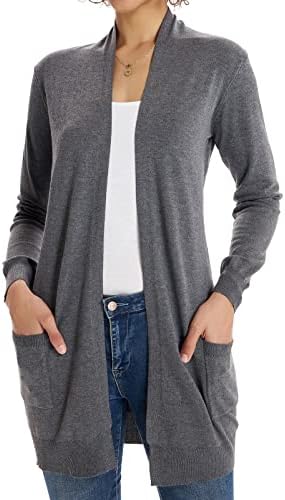
This is the cardigan that lives on the back of your classroom chair. Lightweight enough to wear indoors all day without overheating, open-front so it goes over any top, and — the detail that matters — it has pockets. Markers, a granola bar, the hall pass: all of it ends up in a cardigan pocket by 9am, and a pocketless cardigan is just a decorative layer. The long sleeves and relaxed drape make it comfortable for sitting on low chairs and reading on the rug, and it is the easiest way to make a simple top-and-trousers outfit look finished.
Pros: pockets; lightweight and breathable; open front layers over everything; relaxed drape suits all body types.
Cons: lightweight means it is not a winter coat substitute — on genuinely cold days you will still want a heavier layer for the walk in; the open front can slide off the shoulder when you reach high, so check the fit.
Fit note: relaxed, oversized drape; if you are petite, the longer length may read as oversized — a front tuck of the top underneath keeps the proportions neat.
Wear it with: literally everything in this guide. Start here if you buy only one layer.
2. NIUBIA Knit Sweater Vest, V-Neck, Button-Down — the trending fall layer

Sweater vests are one of the biggest fall teacher trends this year, and this one earns its place for practical reasons, not just fashion ones. Worn over a button-down, it gives you the polished, put-together look of a layered outfit with the arm freedom of a sleeveless piece — no sleeves to push up, nothing to catch on a whiteboard marker tray. The V-neck frames the collar of the shirt underneath, the button front lets you wear it open as a layer or closed as a top, and there is a pocket for the essentials.
Pros: on-trend sweater-vest look; sleeveless freedom for active teaching; button front is versatile; pocket included.
Cons: a vest is a layer, not a standalone top for most dress codes — it needs a shirt underneath; the oversized cut can swamp a petite frame, so try it with a tucked-in shirt first.
Fit note: relaxed, oversized fit by design; size down if you want a neater silhouette over a fitted shirt.
Wear it with: the Zeagoo button-down and the ponte pants for the fall teaching formula, or over the siliteelon shirt with the midi skirt.
12. GRECERELLE Sleeveless Sweater Vest, 100% Cotton — the breathable layer

If the NIUBIA vest is the trend pick, this is the practical one: 100% cotton, which breathes better than synthetic blends in a warm classroom and feels softer against the skin over a full day. It is the vest to choose if your school runs warm, if you run warm, or if you simply prefer natural fibres. The V-neck and button-down front do the same job — a polished layer over a collared shirt — and the cotton knit holds its shape without the static that synthetic knits can build up around dry classroom air.
Pros: 100% cotton, breathable and soft; V-neck layers neatly over collared shirts; button front wears open or closed.
Cons: cotton knits can relax with wear, so expect a slightly looser fit over time; like any vest, it needs a shirt underneath for most dress codes.
Fit note: cotton has less recovery than a synthetic blend — buy your usual size, not a size down, so it does not pull across the shoulders.
Wear it with: the siliteelon shirt and the bootcut pants for a breathable fall outfit, or over a turtleneck when the weather turns.
Bottoms: Trousers and a Skirt That Let You Teach
Teacher bottoms have a harder job than office bottoms. They need to survive sitting on the floor, walking miles of hallway, and bending to a hundred small desks, while still looking like you dressed with intention. The common thread across all four picks below is stretch plus a waistband that does not dig: pull-on or elastic waists, ponte and stretch fabrics, and cuts with real freedom of movement. Three different trouser silhouettes are here on purpose — ankle-length ponte, wide-leg, and bootcut — because different bodies and different dress codes suit different shapes, and a guide that only offers one trouser shape is not much use.
5. Amazon Essentials Ponte Pull-On Ankle Pants — the teaching-day trousers

Ponte is the fabric teachers mention most when they talk about comfortable work trousers, and for good reason: it has the comfort of leggings with the appearance of proper trousers, it holds its shape through sitting and standing, and it does not crease the way woven trousers do. These pull-on ankle pants add the two details that make them classroom-proof — a pull-on waistband that never digs during long sitting blocks, and an ankle length that shows your shoes and stays clear of the floor when you sit on a low chair or the rug. They are the trousers to build a week around.
Pros: ponte comfort with a tailored look; pull-on waistband; ankle length stays clear of floors; machine-washable.
Cons: ponte can feel warm in an overheated classroom — keep a lighter pair for the warmest weeks; the pull-on waist has no belt loops, so the fit depends on the elastic.
Fit note: mid-rise; the ankle length is the point — if you are tall, check the inseam against your usual trouser length before ordering.
Wear them with: either button-down, either cardigan, and the loafers or Mary Janes.
6. IUGA Stretchy Wide-Leg Work Pants — the wide-leg formula

Wide-leg trousers are having a moment — they are all over Pinterest’s fall fashion searches right now — and they happen to be one of the most teacher-friendly cuts available. The wide leg moves freely, lets air circulate, and never binds at the knee when you sit on the floor. These add stretch and pockets, which is the combination that turns a trendy trouser into a working one. Paired with a tucked-in button-down and a sweater vest, they make the outfit that looks most “put together” in this guide for the least effort.
Pros: wide-leg freedom of movement; stretch fabric; pockets; on-trend silhouette that still reads professional.
Cons: the wide hem can drag if the length is wrong for your height — get the length right or hem them; a wide leg plus an oversized top can look shapeless, so tuck or half-tuck the top.
Fit note: high-waisted with a wide leg; pair with a fitted or tucked top to keep the proportions balanced.
Wear them with: the siliteelon shirt tucked in, the cotton sweater vest, and the chunky loafers.
7. Stelle Bootcut Stretch Work Pants with Pockets — the bootcut pull-on pants

Bootcut is the quiet middle ground between a straight leg and a wide leg, and it is the cut that works best with the widest range of shoes — flats, loafers, and a low block heel all sit neatly under a bootcut hem. These are pull-on, stretchy, and pocketed, which covers the three things teachers ask of trousers, and the bootcut shape is flattering without being fussy. If wide-leg feels like too much fabric and a straight ankle pant feels too plain, this is your pair.
Pros: bootcut works with flats and low heels alike; pull-on waist; pockets; stretch fabric.
Cons: the bootcut hem needs the right shoe — very flat ballet flats can disappear under it, so loafers or Mary Janes pair better; check the length, as bootcut hems show a wrong length quickly.
Fit note: pull-on with a bootcut leg; the waist is elastic, so order by your hip measurement if you are between sizes.
Wear them with: the Zeagoo button-down, the lightweight cardigan, and the chunky loafers for the classic teaching day.
8. Basoteeuo Black Pleated Midi Skirt, Elastic Waist — the conference skirt

Every teacher needs one skirt that makes parent conferences and observations feel easy, and a black pleated midi is the most reliable version of it. Midi length meets every school dress code — no worrying about hemlines when you bend or sit — and the elastic waist means it stays comfortable through a long evening of back-to-back meetings. The A-line pleats move when you walk and flare gently when you sit, and black pairs with every top in this guide, which makes it the hardest-working single bottom here.
Pros: midi length passes any dress code; elastic waist for all-day comfort; A-line pleats move freely; black matches everything.
Cons: pleats need a quick shake-out after washing to fall neatly; a black skirt shows chalk dust, so keep a lint roller in your desk drawer.
Fit note: elastic high waist; the midi length should fall below the knee — if you are tall, confirm the length on the listing’s size chart.
Wear it with: the siliteelon shirt and the Mary Jane flats for conferences, or the Zeagoo shirt and the cardigan for a polished teaching day.
Shoes: The Two-Inch Rule
Ask any teacher what matters most in a work outfit and the answer is almost always shoes. You will be on your feet for eight to ten hours, walking corridors, standing at boards, and crouching beside desks, and the wrong shoe will ruin the best outfit by lunchtime. The rule experienced teachers repeat is simple: nothing above two inches on a teaching day. Heels are not wrong — they are just for picture day, not for Tuesday. All three shoes below are flats or low platforms, all three stay under the two-inch ceiling, and all three are built for comfort first. That is the whole point: the shoe that looks right at 4pm is the one that felt fine at 8am.
9. DREAM PAIRS Chunky Platform Loafers — the all-day shoes

Loafers are the default teacher shoe for a reason: they slip on in the morning, they look polished with trousers and skirts alike, and they do not need breaking in the way a lace-up does. These chunky platform loafers add two useful things — a grippy lugged sole for slick hallway floors and wet playground crossings, and a low platform that gives a little height without a heel. The 1.9-inch platform sits just under the two-inch teaching-day ceiling, and the slip-on design means you can kick them off under your desk for a minute when nobody is watching.
Pros: slip-on convenience; grippy sole for hallways; low platform under the two-inch rule; polished with trousers and skirts.
Cons: a chunky sole is a look — if your school leans formal, the sleeker Mary Janes below may fit better; platform shoes can feel heavy until you are used to them, so wear them for a short day first.
Fit note: true to size in most cases; if you are between sizes, the chunkier fit tolerates sizing up better than sizing down.
Wear them with: the ponte pants, the wide-leg trousers, or the bootcut pants — they are the default shoe for three of the four formulas below.
10. DREAM PAIRS Foldable Knit Ballet Flats, Arch Support — the desk-drawer flats

Every teacher should keep a pair of backup flats in their desk drawer, and these are built for exactly that job. They fold flat, so they fit in a tote or a drawer without a fuss, and the knit upper with arch support is the difference between a flat that hurts by noon and one you can actually teach in. The knit is breathable, which matters in warm classrooms, and the arch support is the feature to look for in any ballet flat — most cheap flats have none, and your feet will know by third period. Think of these as your insurance policy: the shoes you change into when the day runs long, or the pair you wear on days when comfort outranks everything else.
Pros: foldable for a tote or desk drawer; arch support — rare in ballet flats; breathable knit; lightweight.
Cons: knit uppers are not weatherproof — save them for dry days and indoor teaching; foldable flats wear out faster than structured shoes, so treat them as a second pair, not your only pair.
Fit note: knit stretches slightly with wear; buy your usual size and expect them to mould to your foot.
Wear them with: anything in this guide, and keep them in your bag for the walk home.
11. DREAM PAIRS Mary Jane Ballet Flats, Ankle Strap — the observation-day flats

The Mary Jane is the dressier flat in this guide, and the ankle strap is doing real work, not just decoration: it keeps the shoe secure on your foot while you move between rooms, so you never have to grip with your toes to keep a flat on. That matters more than it sounds — toe-gripping is tiring, and it is the reason many teachers give up on ballet flats entirely. These are the flats for observation days, parent evenings, and any day when you want to look a little more finished without reaching for a heel.
Pros: ankle strap keeps the shoe secure; dressy enough for observations and conferences; comfortable for all-day wear.
Cons: the strap adds a step to getting dressed — not the shoe for a rushed morning; the dressier look means they show scuffs more readily, so keep them for indoor days.
Fit note: the strap is adjustable in most colourways; check the listing for your size, as Mary Janes can run snug across the instep.
Wear them with: the pleated midi skirt for parent conferences, or the ponte pants for a polished teaching day.

Four Classroom Outfit Formulas (Copy These)
The twelve pieces above are useful on their own, but formulas are what make getting dressed fast. Each formula below uses only pieces from this guide, and each one is built for a specific kind of school day. The prices of the pieces vary by size and colour, so check the listing for your exact combination — every piece is under $50, and a full formula of three or four pieces costs far less than a single department-store outfit.
Formula 1 — The Regular Teaching Day
Zeagoo wrinkle-free button-down + Amazon Essentials ponte pull-on ankle pants + GRACE KARIN lightweight cardigan + DREAM PAIRS chunky loafers. This is the default. The button-down looks intentional, the ponte pants move with you, the cardigan handles the temperature swings, and the loafers survive the hallways. It passes the comfort test on every count, it has pockets in both the cardigan and the trousers, and it works from kindergarten to high school. If you only build one formula, build this one.
Formula 2 — Playground Duty and Active Days
siliteelon classic-fit dress shirt + Stelle bootcut stretch work pants + GRECERELLE cotton sweater vest + DREAM PAIRS foldable knit ballet flats (with the chunky loafers in your tote for the walk in). Active days need the most movement and the least fuss. The bootcut pants give you room to crouch and walk, the cotton vest breathes, the shirt stays tucked and neat, and the knit flats are the most forgiving shoe here. The vest over the shirt keeps you looking polished even when you are the teacher on the field, not the one at the desk.
Formula 3 — Parent Conferences and Observation Day
siliteelon classic-fit dress shirt tucked into the Basoteeuo black pleated midi skirt + GRACE KARIN lightweight cardigan + DREAM PAIRS Mary Jane ballet flats. Conferences are the one day when polish outranks comfort — slightly. The midi skirt is the most formal bottom in the guide, the Mary Janes are the dressiest flat, and the cardigan softens the whole thing so you look approachable, not severe. The elastic waist and the strap-secured flats mean you are still comfortable through a long evening of back-to-back meetings.
Formula 4 — Casual Friday
Zeagoo wrinkle-free button-down + IUGA wide-leg work pants + NIUBIA knit sweater vest + DREAM PAIRS chunky loafers. Friday is when the sweater vest earns its keep. The wide-leg trousers and the vest are the most relaxed combination in the guide while still reading as deliberate, and the burgundy or camel tones that are trending this fall make it feel current without trying too hard. If your school allows dark, neat jeans on Fridays, the vest and button-down work over those too — but check your own dress code first, because jeans are the most contested item in teacher dress codes.
School Dress Code: The Rules Worth Knowing Before You Shop
Every school’s dress code is different, and the only rule that truly matters is the one in your own employee handbook. But the patterns across schools are consistent enough to shop by, and knowing them saves you from buying pieces you cannot wear: Coverage is the baseline. Avoid sheer fabrics, low necklines, short hemlines, and anything tight enough to restrict movement. Midi lengths, higher necklines, and three-quarter or long sleeves are safe almost everywhere. Jeans are contested. Some schools allow neat, dark jeans on Fridays; others ban denim outright. Do not assume — check the policy, and when in doubt, trousers are the safer buy. Leggings need a long top. Most schools that allow leggings require a tunic or dress that covers the hips. Ponte pants are the safer alternative: they look like trousers and feel like leggings. Shoes have rules too. Many schools require closed-toe shoes, and some specify no high heels or open-toe sandals. All three shoes in this guide are closed-toe flats or low platforms. The three B’s. Some dress-code guides still use the old shorthand — no exposed breasts, belly, or butt — and while the language is dated, the underlying point stands: if you have to ask whether it is appropriate for school, it probably is not. Grade level changes the answer. Early-years teachers sit on the floor constantly and need the most movement-friendly clothes; high-school teachers can lean slightly more formal. Buy for the youngest student you teach, not the oldest. When a piece in this guide would not pass your school’s code, the fix is usually a layer, not a replacement: a cardigan over a sleeveless top, a longer top over leggings, a midi skirt instead of a knee-length one. The formulas are built to be adjusted, not followed literally.
Fabric and Stain Practicality: What Actually Survives the Classroom
The difference between a teacher wardrobe that lasts and one that falls apart is almost entirely fabric. Chalk dust, whiteboard markers, glue sticks, paint, playdough, and lunch duty are all part of the job, and the right fabric makes them a non-event instead of a ruined shirt. Shop by these rules: Machine-washable beats everything. If the care label says dry-clean only, it does not belong in a daily teaching rotation. Every piece in this guide is machine-washable. Wrinkle-resistant saves your mornings. Ponte, wrinkle-free cotton blends, and knit fabrics come out of the dryer looking pressed. Pure linen and crisp cotton look wonderful and wrinkle before first period. Dark colours and prints hide stains. A white blouse is beautiful and will meet a marker by 9am. Save light colours for conference days; wear navy, black, burgundy, and prints for everyday teaching. Stretch is not a luxury. Fabrics with a little stretch — ponte, stretch cotton, knit blends — move when you bend and recover when you stand. Rigid woven fabrics bind at the shoulders and knees. Pockets are a feature, not a detail. A cardigan with pockets, trousers with pockets, a vest with a pocket: these are the pieces you will reach for, because a teacher’s hands are always full. A note on stain care, since it comes up constantly: treat marker and paint stains the same day if you can, cold water first, and never put a stained garment in the dryer until the stain is out — heat sets it. That is the whole system. No special products required.
How We Chose These 12 Pieces
We started with 12 candidate pieces and kept 12 after verifying each displayed price on Amazon; the final picks range from $14.99 to $39.98, all under $50. We did not test these clothes ourselves, and we do not claim to have done so. The recommendations come from the listing details (fabric, cut, pockets, waistband, heel height), from the patterns across teacher outfit guides and teacher-creator discussions, and from the comfort and dress-code rules those sources repeat. Where a listing carries a best-seller badge or a specific product claim, we say so and name the source; everywhere else, we describe what the listing itself states. Prices are the prices displayed by Amazon at verification time and can change — always check the listing before you buy.
Shopping Tips for Building a Teacher Wardrobe on a Budget
Buy the formula, not the piece. A single beautiful top you cannot pair with anything is a waste of money. Buy in combinations — top plus bottom plus layer — and check that each new piece works with at least three things you already own. Start with neutrals, add colour second. Black, navy, and charcoal trousers plus a white and a navy top will carry a whole week. Add burgundy, mustard, or a leopard-print shoe once the base is solid — those are the accents trending this fall, and one accent per outfit is enough. Check the size chart, not your usual size. Amazon brands size differently, and a size that fits in one brand will not fit in another. The size chart on each listing is the only reliable guide. Watch the price by size and colour. Amazon prices vary by size and colour on the same listing. If your size shows a higher price, try a different colour — the same piece in navy is often cheaper than in the season’s trending shade. Order the shoes first. Shoes are the hardest fit to get right and the most likely to need an exchange. Order them early so you have time to swap sizes before you need them. Keep a desk-drawer kit. Backup flats, a lint roller, a stain stick, and a spare cardigan in your classroom will save more outfits than any shopping decision.
Frequently Asked Questions
What should a teacher wear to school every day?
A comfortable base, a polished top, a removable layer, and flat shoes: stretch trousers or a midi skirt, a wrinkle-free button-down or knit top, a cardigan or sweater vest, and loafers or ballet flats. The formula matters more than any single item: if each piece passes the sit, bend, reach, and walk test, the outfit will work all day.
Are teachers allowed to wear jeans to school?
It depends entirely on your school. Some allow neat, dark jeans on Fridays or casual days; others ban denim outright. Jeans are the most contested item in teacher dress codes, so check your employee handbook or ask your administration before building outfits around them. Trousers in ponte or stretch fabric are the safer everyday choice and feel just as comfortable.
What shoes should a teacher wear for standing all day?
Flat shoes with support: loafers, ballet flats with arch support, or Mary Janes with a strap. The widely repeated rule is nothing above two inches on a teaching day, because a day that starts with corridor duty and ends with after-school activities means eight to ten hours on your feet. Avoid shoes you have to grip with your toes, and keep a pair of foldable flats in your bag or desk drawer as a backup.
What is the best outfit formula for a teacher on a budget?
One formula covers most days: a wrinkle-free button-down, pull-on ponte trousers, a pocketed cardigan, and loafers. Four pieces, each under $50, that mix with almost anything else in your closet. From there, add one wide-leg trouser and one sweater vest and you have a full week of outfits without buying a single dress.
Can teachers wear leggings to school?
Usually only with a long top. Most schools that allow leggings require a tunic, long sweater, or dress that covers the hips. Plain leggings as trousers are not accepted in most dress codes. Ponte pull-on pants are the better buy for most teachers: they feel like leggings, look like proper trousers, and pass dress codes that leggings do not.
How do I dress professionally as a teacher without dry-clean-only clothes?
Choose machine-washable fabrics with structure: ponte trousers, wrinkle-free button-downs, knit cardigans, and midi skirts. Polish comes from fit and layering, not from fabric cost — a tucked-in shirt, a cardigan, and clean flats look more professional than a dry-clean-only blouse worn with tired shoes. Avoid sheer fabrics and anything that needs ironing before every wear.
The Bottom Line
Teacher outfits for women do not need to be expensive, and they do not need to be complicated. They need to move when you move, wash when they get dirty, and look polished when a parent walks in. Twelve pieces under $50 — two wrinkle-free tops, three layers, four bottoms, and three pairs of flats — build four formulas that cover the teaching day, playground duty, parent conferences, and casual Friday. Start with the teaching-day formula, run every new piece through the 60-second comfort test, and buy the shoes first. The classroom will test everything you wear; buy the clothes that are ready for it.
2 responses