
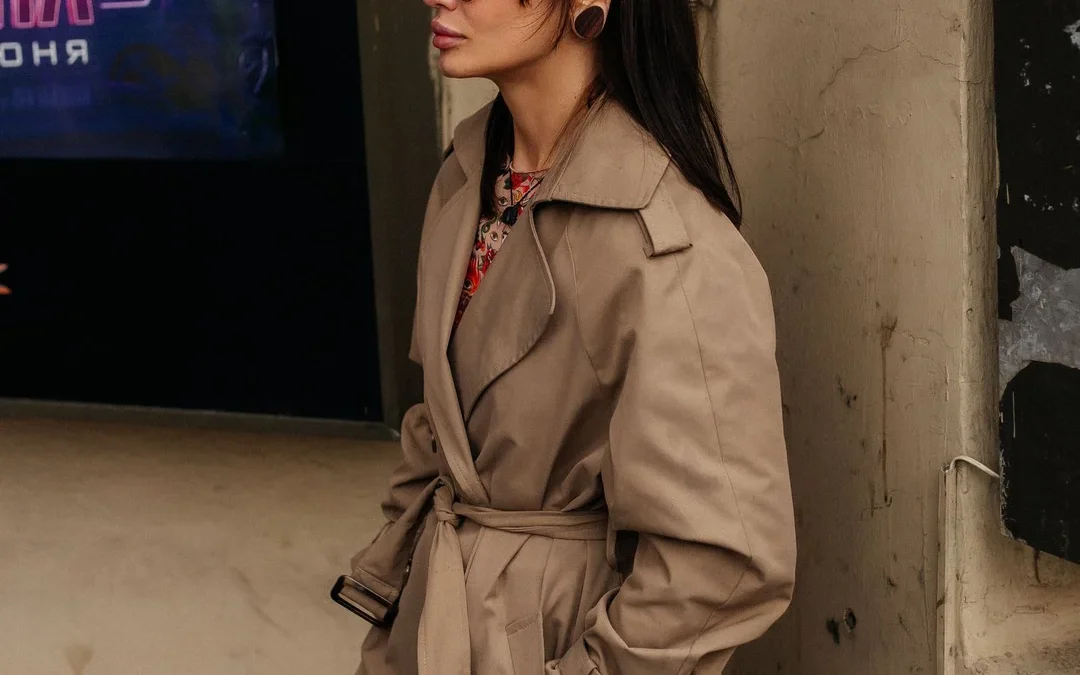
Shopping for a petite trench coat is a strange kind of frustrating. The coat looks perfect on the model, you order your usual size, and what arrives ends halfway down your calves, with sleeves over your hands and a belt sitting around your hips. It is not that trench coats don’t work on short frames. It is that most of them were never cut for one.
Here is the part worth knowing first: a real petite trench is not just a regular trench in a smaller size. Petite grading shortens the whole garment in proportion — body, sleeves, shoulder-to-waist distance, even lapels and buttons. On Amazon, very few listings actually say “petite,” so the filter that matters is the stated garment length and sleeve length in the size chart, plus the checks below.
Every pick below is a real Amazon listing under $80 (prices verified at publish time through the product cards), sorted by the fit job it does best: cropped lengths that can’t swamp you, classic belted coats, rain-ready coats, and warmer wool-blend coats for November.
As an Amazon Associate I earn from qualifying purchases.
The 60-second petite trench fit check
Hem: the guides disagree on the exact spot — mid-thigh vs just below the knee — and the rule that settles it is simple: never let the hem land at the widest part of your calf. That one line cuts your legs in half visually. Land above it or below it. On a 5’4″-and-under frame, that usually means mid-thigh to just above the knee for a short trench, or just below the knee for a classic one, and a stated length around 32 to 36 inches is a good number to compare against your own measurements.
Sleeves: with arms relaxed, the cuff should end at your wrist bone, showing a sliver of wrist — roughly between wrist and thumb knuckle. Sleeves over your hands make the whole coat look borrowed. If you hold an umbrella a lot, check with your arm extended too, because reaching shortens your coverage.
Shoulders: the seam should sit right on the edge of your natural shoulder. Dropped seams are the fastest way a coat looks sloppy on a short frame, and the hardest thing to tailor cheaply. Size for the shoulder first.
Belt: it should buckle at your natural waist, not your hips. A wrap or tie belt is your friend here, because you place it where your waist actually is instead of trusting a fixed belt loop. A wide, stiff belt worn low will chop you in half.
Rain check: pull the hood up and turn your head both ways — a hood that slides over your eyes is a classic failure of a regular-size hood on a petite wearer. And sit down in the coat: a hem that rides off your lap in the car won’t keep you dry on a wet commute.
At a glance
Coat | Best for | Price |
|---|---|---|
| Tankaneo Cropped Double Breasted Short Jacket | Shortest, safest length | $34.99 |
| Tankaneo Cropped Single Breasted Lightweight Jacket | Light travel and weekend wear | $42.99 |
| GRACE KARIN A-Line Notch Lapel Double Breasted Trench | Waist definition with a forgiving flare | $79.99 |
| wantdo Waterproof Classic Lapel Trench with Belt | Everyday rain | $49.96 |
| wantdo Double Breasted Mid-Long Trench with Belt | Colder, wetter days | $56.97 |
| chouyatou Herringbone Wool Trench | Texture without extra hardware | $53.99 |
| Betusline Double Breasted Waterproof Trench with Belt | Belted rain pick | $59.99 |
Prices are the ones shown on the product cards below at publish time and can change on Amazon. If a card shows no price, treat that pick as unverified and skip it.
Cropped and short: the lengths that can’t swamp you
Tankaneo Cropped Double Breasted Short Jacket
If you have ever been talked out of a trench because “they’re too long for you,” start here. The cropped length ends well above the calf problem zone, so the hem question basically answers itself. The double-breasted front and notched lapel keep it looking like a trench rather than a jacket pretending to be one, and the listing describes it as fully lined with raglan sleeves and button cuffs.
Pros: shortest length in this guide, least risk of looking swallowed; classic trench details in a short cut; lined.
Cons: cropped means less rain coverage and less warmth; double-breasted fronts add visual width, so check the shoulder measurement first if you are between sizes.
Fit note: cropped on the listing does not guarantee cropped on you — compare the stated length to your own mid-thigh before ordering.

Tankaneo Cropped Single Breasted Lightweight Jacket
The single-breasted version of the same idea, and the one to pick if double-breasted fronts feel like too much hardware on a short torso. One row of buttons, a lighter feel, and a shape that packs down more easily — this is the weekend and travel pick.
Pros: lighter and less bulky; easier to layer without a stiff front; good transitional weight for fall.
Cons: less wind protection than an overlapping double-breasted front; cropped length means you will want something longer for a real downpour.
Fit note: lightweight fabric shows fit mistakes honestly — if the shoulder seam drops, you will see it. Size for the shoulder.

Classic belted: where the waist actually lands
GRACE KARIN A-Line Notch Lapel Double Breasted Trench
The pick for anyone who wants waist definition without a coat that grips. The top is fitted, the skirt flares into an A-line, and the belt marks the waist — the flare forgives hips and lets you sit without pulling. It is also the pick where the calf rule matters most: an A-line hem swings when you walk, so check where it settles, not just where it hangs.
Pros: fitted top with a forgiving flare; belt defines the waist; pockets.
Cons: the flare adds volume over a thick sweater; double-breasted front is more fabric across the chest.
Fit note: tie the belt at your natural waist, not looped low. That one change is the difference between “fits” and “fits like it was made for you.”

Rain-ready: coats for an actual commute
A trench that looks right and leaks is not a raincoat. These three are the ones to check first for a real November commute — and the fit checks above matter twice as much here.
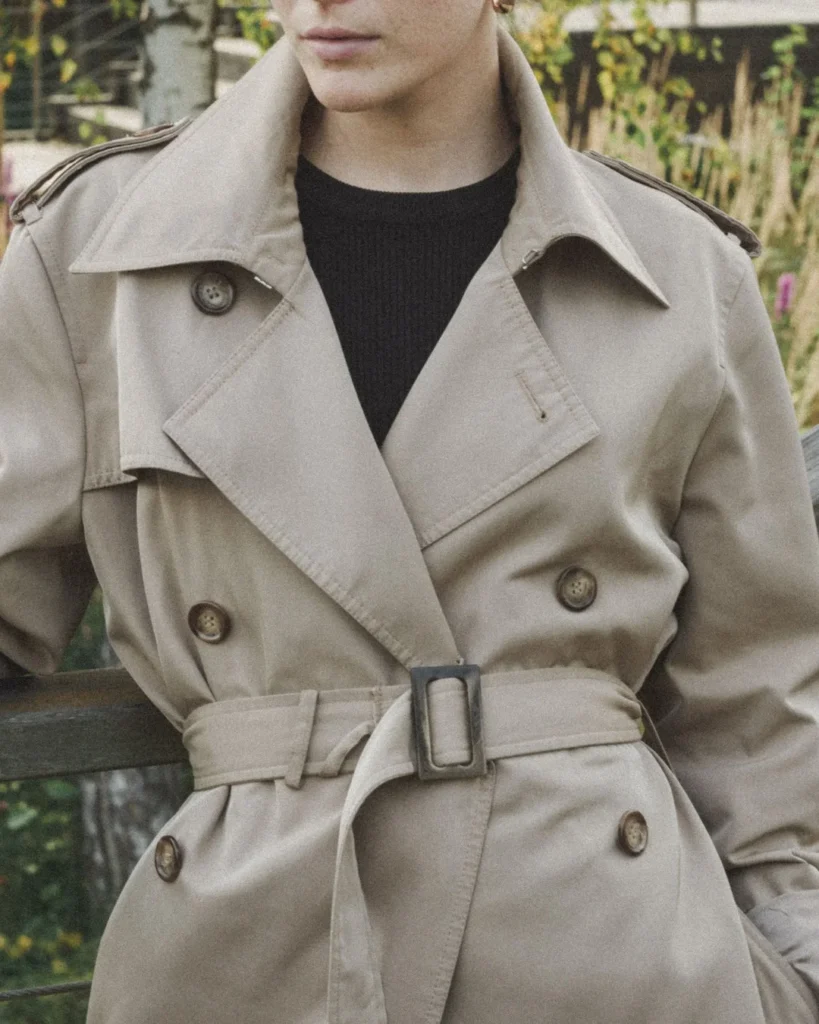
wantdo Waterproof Classic Lapel Trench with Belt
The listing describes a 3000mm waterproof fabric with a windproof build and a belted classic lapel — a proper rain spec, not just a water-resistant label. The classic shape also works for work, so you are not buying a separate “rain only” coat that lives in a closet.
Pros: stated waterproof rating; belted classic shape works for office and weekend; windproof build.
Cons: waterproof fabrics can feel less breathable on a mild day; check hood and cuff behaviour on the listing photos first.
Fit note: do the extended-arm sleeve check — hold your arm out like you are holding an umbrella and see where the cuff lands. That is your real rain sleeve length.

wantdo Double Breasted Mid-Long Trench with Belt
The colder-weather version: double-breasted, windproof lining, and a detachable buckle belt, so you can wear it belted for shape or open as an overcoat. The length covers more leg, which is a real benefit in rain and wind — provided the calf rule is respected.
Pros: warmer and more protective; double-breasted overlap adds wind resistance; belt is detachable if you prefer it open.
Cons: the longest rain pick here — only keep it if the stated length lands at or above your knee.
Fit note: mid-long on a tall model can read as long on a 5’2″ frame. Check the stated length against the calf rule before ordering, not after.

Betusline Double Breasted Waterproof Trench with Belt
A waterproof, belted, classic-lapel trench — the rain pick. It earns its place on the waterproof spec alone: if the other rain picks are out of your size, this one keeps the belted shape without giving up the rain job.
Pros: waterproof spec; classic belted shape; lapel reads as a trench, not a rain shell.
Cons: long version on this listing page — length check is make-or-break.
Fit note: same rule as every long pick here: hem above or below the widest calf, never on it.

Warmer wool-blend: November layering without the swamp
chouyatou Herringbone Wool Trench
Herringbone is texture doing the work. The woven pattern reads as intentional even without extra hardware, and the wool-blend warmth suits late November. The fitted shape with a belt still defines the waist, so the warmth does not come with shapelessness.
Pros: texture adds interest without hardware; wool warmth; fitted shape with belt.
Cons: heavier than a lightweight trench; wool-blend care may need attention — check the care label on the listing.
Fit note: layer thin underneath. A thick sweater under a fitted wool trench pulls the shoulders and gaps the front — save the chunky knit for an overcoat instead.

How we chose
We started from the fit problem, not the brand list: we read the current petite fit and rain-coat guides to pin down the checks that matter, then shortlisted Amazon listings whose descriptions matched them — cropped lengths, adjustable wrap waists, stated waterproof fabric, wool-blend warmth — all under the $80 cap. Prices were verified through the product cards at publish time, and any pick that failed was cut, not kept with a guessed price. No coat here was tested by us, and where a listing’s length is uncertain, the guide says to measure instead of promising a fit.
Shopping tips for a petite trench
Measure twice, order once. Measure your shoulder width, sleeve length, waist, and the distance from your shoulder to where you want the hem to land — then compare those numbers to the size chart. Do not order your usual size and hope.
Sleeves first. A long sleeve is the easiest fit problem to spot and the hardest to live with: a sleeve that covers your hand makes the whole coat look borrowed. If the sleeve is a touch long, a tailor can shorten it; a hem that lands on your calf is a bigger job.
Belt at your waist, not your hips. If the belt loops sit at your hips, the coat will cut you in half visually no matter how good the fabric is. A wrap belt you can tie at your natural waist solves this better than a fixed buckle belt.
Don’t size up for layers. Sizing up moves the shoulder seam and lengthens the sleeve. Pick a cut with room in it instead — and a sleeve hem is a small alteration, while a shoulder rebuild is not.
Check the return policy before you buy. At this price, fit is the quality test: order the coat, try it with the shoes and trousers you will actually wear, and send back anything that fails the calf, sleeve, or belt check.
FAQs
What length trench coat is best for a petite woman?
Mid-thigh to just above the knee is safest; just below the knee works if the hem clears the widest part of your calf. Avoid a hem that lands right on the calf — it cuts your legs in half visually. Check the stated garment length before ordering.
How should a trench coat fit a short woman — sleeves and shoulders?
Sleeves should end at your wrist bone, and the shoulder seam should sit on the edge of your shoulder, not drooping down your arm. If both of those are right, the coat will look made for you even if the length is a touch long — and a sleeve hem is a cheaper fix than a shoulder rebuild.
Can petite women wear long trench coats?
Yes, if the hem clears your calf or lands just below the knee with a slim silhouette. A long coat that pools at the ankle or hits the widest calf will shrink you visually. Look for a longer coat with a defined waist and a single vent, so it moves instead of swallowing you.
Should a petite woman choose a single-breasted or double-breasted trench?
Single-breasted if you want the least bulk: one row of buttons lies flatter across the chest. Double-breasted if you want the classic look and extra wind protection — just check that the overlap does not add width you do not want. Either works if the shoulder and sleeve fit.
Is a trench coat good in the rain?
Only if the fabric is actually waterproof or water-resistant — a cotton trench that looks right but leaks is not a raincoat. Check for a waterproof or water-repellent spec, and test the hood: it should not slide over your eyes when you turn your head.
How do you layer under a trench coat without looking bulky?
Layer thin, not thick: a fine knit or long-sleeve top under a trench keeps the shape, while a chunky sweater gaps the front and pulls the shoulders. If you need real warmth, add a thin thermal layer rather than sizing up the coat.
Bottom line
A petite trench coat that fits is not about finding a magic brand. It is about three measurements — hem vs calf, sleeve vs wrist, belt vs natural waist — and refusing a coat that fails any of them. Start cropped for the safest bet, pick a wrap waist if belt placement has burned you before, and go rain-first if your November actually involves rain. If a listing won’t tell you its length in inches, that silence is your answer.
Related reading: if inseams are your other headache, start with the petite jeans inseam guide, then the petite wide leg pants guide. For a full-season plan, see how to build a fall capsule wardrobe on a budget, and for work, office-polished work dresses under $50.


2 responses